
LED Street Light
Eight series, 50 to 300 W, 100 to 195 lm/W. 6 kV surge protection and IP65 are built into every model, not sold as upgrades. Specify the optics, driver and chip to match your tender — or take a fixed specification straight off the shelf.
MOQ 200 per model · 6 kV surge as standard · IES files on the project series · 3-year project warranty
Same factory, two specifications. Pick the one your market asks for.
The range splits by buyer, not by wattage. If you are quoting a tender, you need the series you can configure. If you are stocking a shop or supplying small municipal work with no specification attached, you need the fixed-spec series — cheaper, and one carton carries up to 30 pieces.
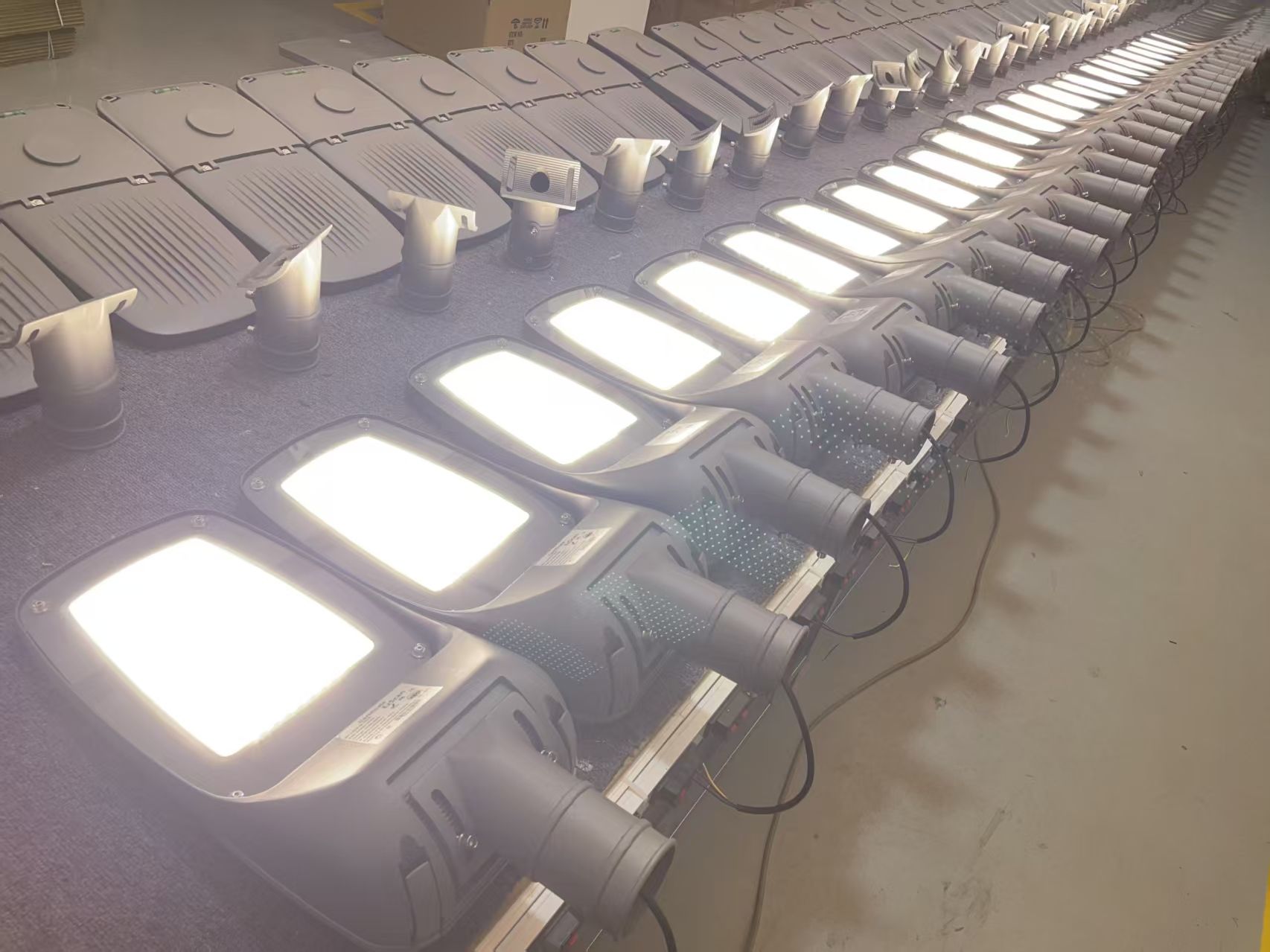
Project series
LED01 · LED03 · LED06 · LED08
- 150–195 lm/W — 195 available from 500 pieces
- Optics, driver, LED chip and SPD — all configurable
- IES files and DIALux support included
- 3 years, with 5 and 7-year terms available
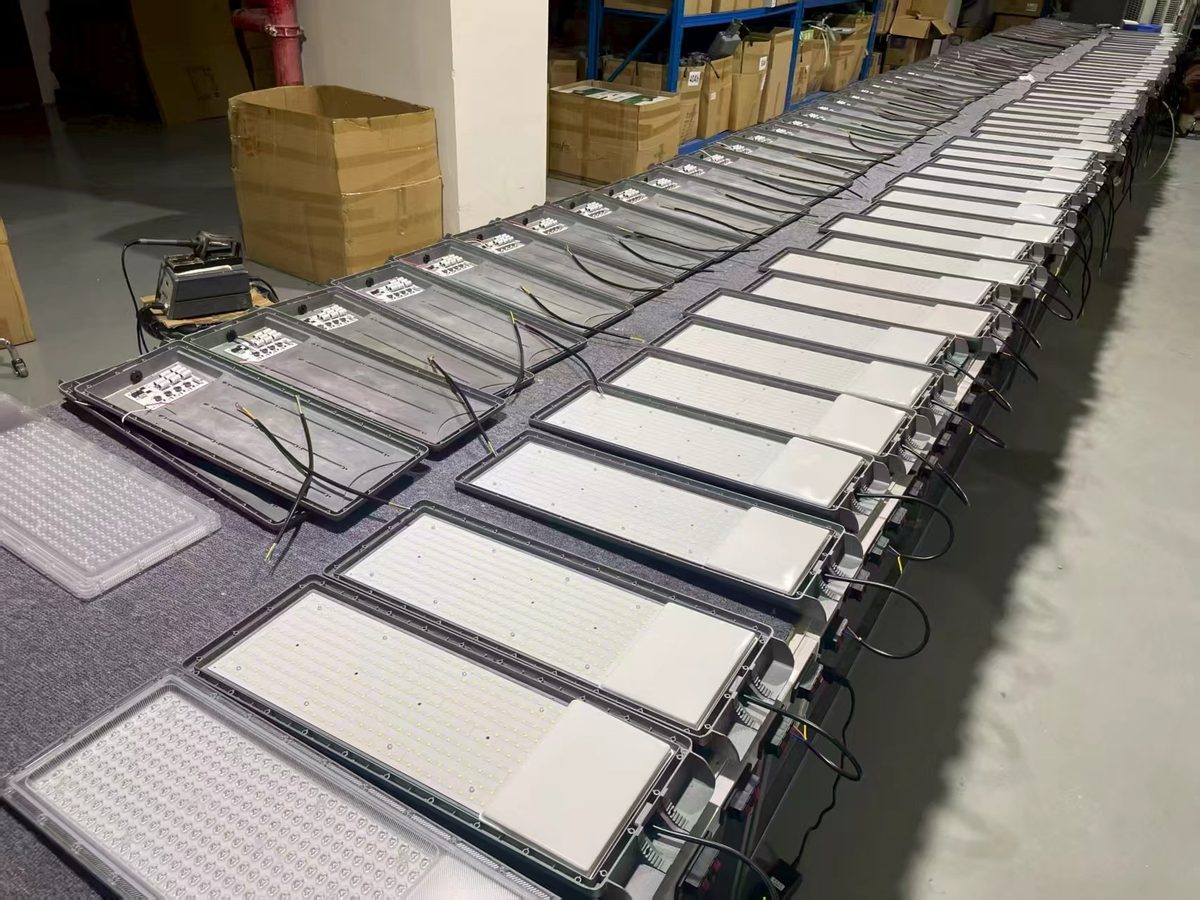
Wholesale series
LED02 · LED04 · LED05 · LED07
- 100–110 lm/W — fixed specification
- Same bill of materials on every repeat order
- Up to 30 pieces per carton
- 2-year warranty
All eight series, side by side.
| Series | Power | Efficacy | Pcs / carton | Warranty | Line |
|---|---|---|---|---|---|
| LF-LED01 | 50–200 W | 150 lm/W | 1 | 3 years | Project |
| LF-LED03 | 50–300 W | 150–195 lm/W | 1 | 3 years | Project |
| LF-LED06 | 50–200 W | 195 lm/W | 1 | 3 years | Project |
| LF-LED08 | 50–300 W | 150–190 lm/W | 1 | 3 years | Project |
| LF-LED02 | 50–200 W | 100–110 lm/W | 10 / 10 / 5 / 5 | 2 years | Wholesale |
| LF-LED04 | 50–200 W | 100–110 lm/W | 30 / 30 / 20 / 20 | 2 years | Wholesale |
| LF-LED05 | 50–200 W | 100–110 lm/W | 12 / 12 / 12 / 8 | 2 years | Wholesale |
| LF-LED07 | 50–200 W | 100–110 lm/W | 10 / 10 / 5 / 5 | 2 years | Wholesale |
Pcs per carton follows the power ladder from lowest to highest wattage. Full specification for each series is on its own page.
A 150 lm/W luminaire and a 195 lm/W luminaire look identical on a quotation.
They are not identical after three years on a pole. Lumen depreciation — the loss of light output over time — is set by four things: the driver, the lens, the LED chip and the heat path. Three of them you can buy in from a good supplier. The fourth you have to build.
Driver
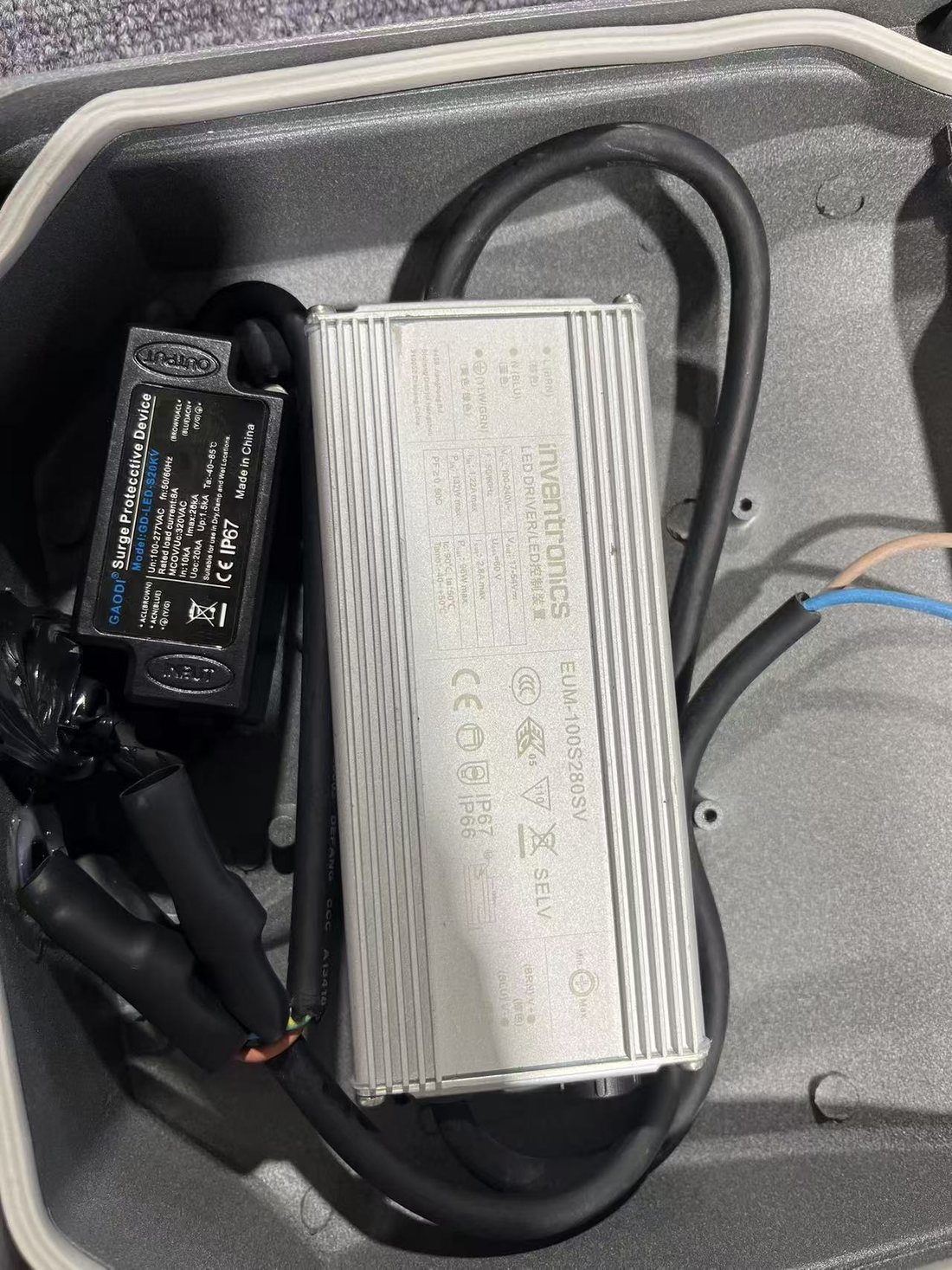
A cheap driver runs hot and drifts out of regulation. Our own driver is standard; Philips, MOSO, Inventronics and MEAN WELL are available when a tender names a brand.
Lens
Optical lenses hold their transmission. Low-grade polycarbonate yellows under UV and loses a tenth of its output before the LEDs have aged at all.
LED chip
3030, 5050 and 7070 are all available. A larger chip spreads the same current over more area, which lowers junction temperature and slows the drop.
Heat path
Before the LEDs are mounted, we grind the housing face flat and apply thermal grease. That closes the air gap between chip and casting — the most common cause of early lumen loss. All four project series go through it; it is not an upgrade.

Mains or solar? The grid decides, not the price list.
If the site has a reliable grid connection, a mains-powered luminaire costs less per lumen and has no battery to replace. Solar wins where trenching is expensive, the grid is absent, or outages are frequent enough to matter.
| Situation | What to specify |
|---|---|
| Grid present and stable | Mains LED — lower cost per lumen, no battery |
| No grid, or frequent outages | Solar — self-contained, no trenching |
| Trenching cost high or permit slow | Solar — installation is a pole, not a cable |
| Service access difficult | Mains — fewer parts to fail on the pole |
Still weighing it up? Compare the two solar ranges:
ABS wholesale solar →
LF-YT engineering solar →
What every model carries, whichever series you choose.
6 kV surge
Built into the driver stage. In thunderstorm regions this is the difference between a driver that lasts three years and one that lasts eight.
IP65
Die-cast aluminium housing, sealed against dust and water jets.
φ60 mm
Fits standard pole brackets, so your installer does not need an adapter.
−20 to 55 °C
Rated for the full range without derating.
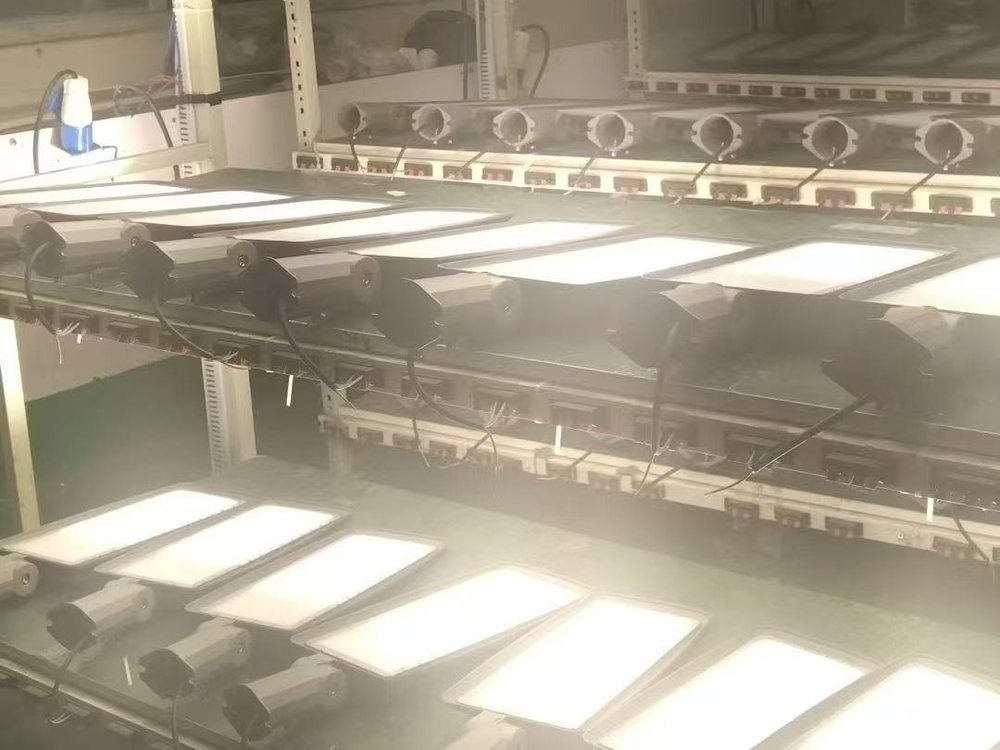
24-hour ageing
Every unit runs a full day on the ageing rack before packing. A driver that drifts shows up here, not on the pole.
Three-layer anti-corrosion
Surface passivation, fluorocarbon electrostatic spraying and anodizing on the die-cast housing. The same three processes across all eight series.
24 hours on the ageing rack before anything is packed.
Every luminaire is powered for a full day, not spot-checked from the batch. Anything that drifts in the first 24 hours drifts here, not on the pole.
Three years on the project series. Two on the wholesale series.
The difference is not a marketing line. The project series is built on a 150–195 lm/W platform around a driver you name; the wholesale series is built to a fixed 100–110 lm/W specification for markets where a failed unit is replaced rather than serviced. Five and seven-year terms are available on the project series where the tender asks for them.
| Series | Standard | Optional |
|---|---|---|
| LED01 · LED03 · LED06 · LED08 | 3 years | 5 years · 7 years |
| LED02 · LED04 · LED05 · LED07 | 2 years | — |
Straight answers on specification.
What is the difference between the two series?
The project series is configurable and built to 150–195 lm/W with a driver you can name. The wholesale series is a fixed 100–110 lm/W specification built for volume and quick repeat orders. Same factory, different bill of materials.
Can you supply 195 lm/W?
Yes, on LED01, LED03, LED06 and LED08, from 500 pieces per model. It is the same housing and the same optics — a different chip bin and driver setting.
Which drivers can you fit?
Our own driver is standard. Philips, MOSO, Inventronics and MEAN WELL are available as options, so you can meet a brand clause in the tender.
Type II or Type III?
Both are standard, and custom beam angles are available. Type II suits narrower residential and estate roads; Type III covers wider carriageways and staggered pole layouts.
Do you provide IES files?
Yes — four photometric files, one for each project series, ready to import into DIALux or Relux. Ask and we will send the pack with the quotation.
Is surge protection included?
6 kV is built into every model. An optional SPD module rated 10 kA (In) / 20 kA (Imax), Up 1.5 kV, can be fitted, and it does not change the IP rating.
What is the MOQ?
200 pieces per model. LED chip options also start at 200. The 195 lm/W version starts at 500.
Can I add a photocell or networked control?
Yes. A ZAGA interface is available as an option, so photocell sensors or networked control modules can be fitted at the factory or added in the field.
Send us the road, not just the wattage.
Tell us the road width, mounting height, pole spacing and the lux level the tender asks for. We will come back with a luminaire, an optics choice and a DIALux calculation — usually the same day.